Why does a riad or hotel need its own website if it’s already on Booking and Airbnb?
Because platforms get you discovered, but it’s your website that turns that discovery into a direct booking, with no intermediary commission and a direct relationship with the guest. A riad, guest house or hotel in Morocco needs both: the platform as a shop window, the website as home.
Sunday evening, in Lyon. Claire is planning a long weekend in Marrakech. On a booking platform, she spots your riad: patio, fountain, a terrace overlooking the rooftops of the medina. Before booking, she types the riad’s name into Google. Either she finds a beautiful website, in French, with the rooms, a “Book direct” button and a WhatsApp number to ask for an airport transfer. Or she finds nothing, and goes back to the platform… or to the riad next door.
What a website in your own name gives you:
- No intermediary commission on direct bookings: the only remaining cost, where applicable, is the online payment fee.
- Direct contact with the guest before arrival: arrival time, transfer, dietary needs, birthdays.
- Guests who come back to you, not to the platform.
- Your story, told your way: the house, the family, the neighborhood, the food.
- A presence on Google and in AI assistants, under your own name.
This isn’t about leaving the platforms: they remain an excellent channel for getting discovered. The goal is for a growing share of your bookings to come direct, especially loyal guests and those who search for you by name. Also reread your contracts: some regulate the prices you display elsewhere.
What should a riad or guest house website include to make people want to book?
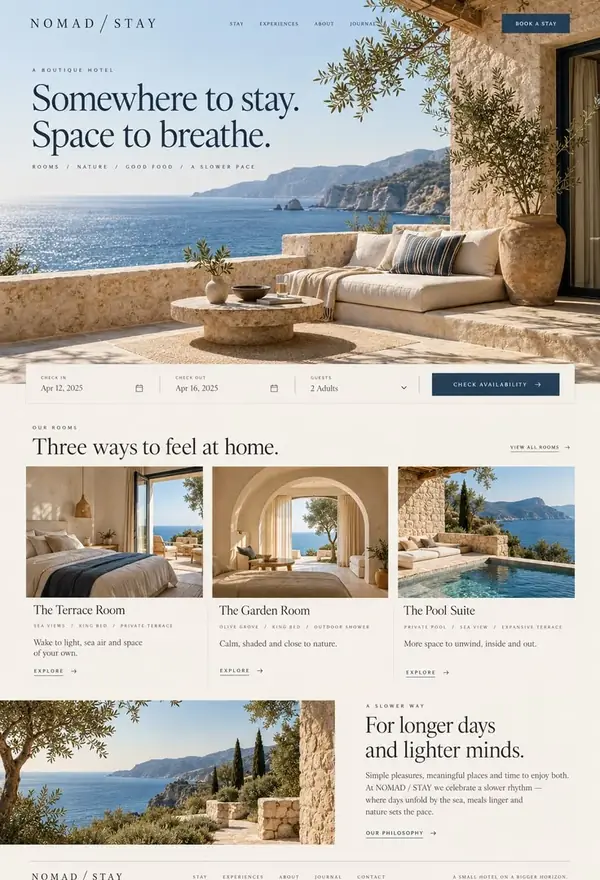
A riad website should transport visitors within ten seconds, then answer every practical question: the rooms, the prices, how to get there, the services and how to book. Travelers book once they no longer have any doubt.
| Page | What travelers want to know | Don’t forget |
|---|---|---|
| Home | The atmosphere, the place, the style | A large photo of the patio or terrace, and the “Book” button always visible |
| Rooms and suites | Size, beds, bathroom, view, price | One page per room, several photos, capacity |
| Services and experiences | Breakfast, hammam, dinner, excursions | Airport transfers, cooking classes, day trips (Agafay, Ourika, Essaouira…) |
| Getting there | How to get there, especially in the medina | Where guests are met, a map, the nearest parking |
| Policies | Cancellation, deposit, check-in and check-out times | Tourist tax if any, children, pets |
The “Getting there” page is often forgotten. In Marrakech or Fez, many riads are tucked away in alleys where cars can’t pass: explaining where the taxi drops guests off, and that someone will be waiting to walk them in, saves plenty of anxious calls on arrival night.
How does direct booking work on a hotel website in Morocco?
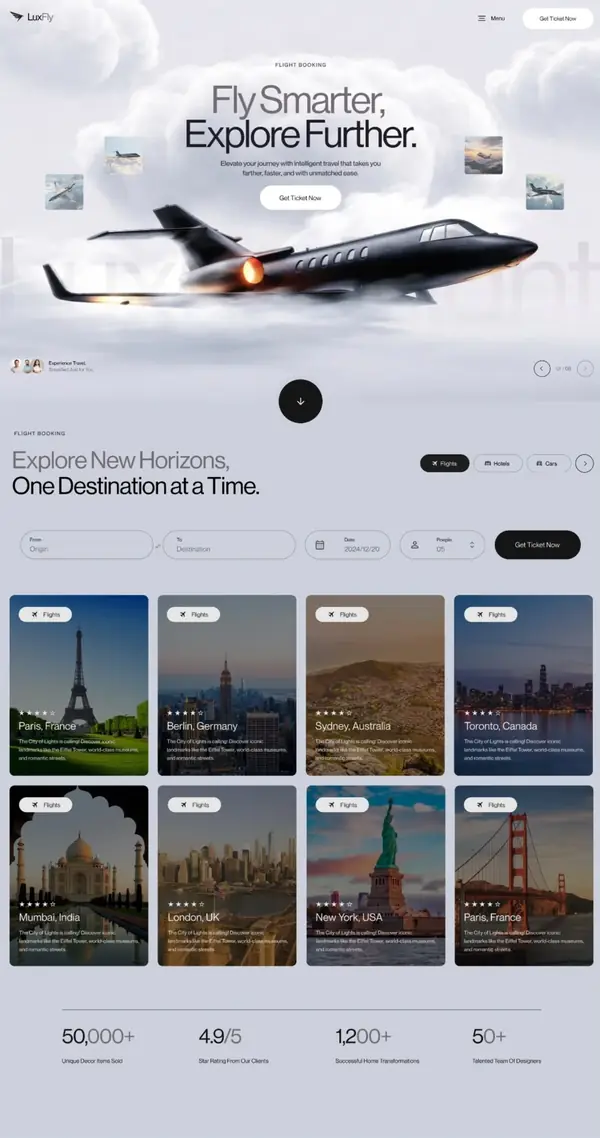
Direct booking runs through a booking engine built into the website: the guest picks their dates, sees available rooms and their prices, then confirms, with or without online payment. For a small guest house, a request via a form or WhatsApp, confirmed manually, can be enough to start with.
| Option | How it works | Best for |
|---|---|---|
| Request via form or WhatsApp | The guest sends their dates, you confirm availability and price | Guest houses with a few rooms, getting started |
| Booking engine | Real-time availability and prices, instant confirmation | Riads and hotels that receive bookings every day |
| Booking engine plus channel manager | Availability updates everywhere: website, Booking, Airbnb… | Properties listed on several platforms |
The real danger is double booking: the same room sold twice for the same nights. A channel manager, or at the very least calendar syncing when your platforms offer it, prevents this. Choose the tool with your provider before building the website, not after.
Before paying, travelers want reassurance:
- The total price shown clearly: breakfast and taxes included or not.
- The cancellation policy in one sentence, next to the button.
- Instant confirmation by email and WhatsApp.
- A reachable phone number for those who prefer to talk to someone.
Which payment methods should a riad or hotel website offer?
Offer online bank card payment, via the CMI once your bank has approved it, to collect a deposit or the full stay, and leave the option of paying the balance on site. Foreign travelers are used to paying by card when they book, and a deposit commits the guest.
- Card via the CMI: the process goes through your bank; ask about the terms and fees in your contract.
- Deposit, then balance on site: a flexible option that small properties appreciate.
- Bank transfer for groups, weddings and seminars.
- Prices in dirhams: showing an amount in euros can help, as long as you state the currency actually charged.
Full details in our guide to online payment in Morocco.
A multilingual website for tourists: which languages for a riad or hotel in Morocco?
A Moroccan accommodation website should at least speak French and English for tourists, and Arabic for Moroccan and Arabic-speaking guests; depending on your travelers, Spanish, Italian or German may be added. Look at where your current guests come from: your bookings hold the answer.
- Each language written and proofread by a human: machine translation is spotted immediately, and it doesn’t inspire confidence at the moment of payment.
- Keywords specific to each language: “riad with pool Marrakech medina” is not the same as “riad avec piscine Marrakech”, nor “رياض في مراكش”.
- Each version on its own URL, flagged to Google (hreflang), so that English-speaking travelers land on the English page.
- The WhatsApp number visible in every version: many Moroccan families prefer to call or message before booking.
July, in Marrakech. A family searches for “guest house Essaouira pool” for a week. The father wants to see the price of the family room and ask a question in Arabic, on WhatsApp. If your website only speaks English and shows no number, that booking goes elsewhere.
How does a riad website in Marrakech or Fez get found on Google and in AI assistants?
A riad website gets found through three doors: Google, for your name and for specific searches (“riad with pool medina Marrakech”); your Google Business Profile, with its photos and reviews; and AI assistants, increasingly used to plan trips.
- Professional photos, taken at the right time of day: the patio in the morning, the terrace at sunset. For accommodation, they’re the number one selling point.
- One page per room and per experience (hammam, cooking class, excursion): each one can rank for its own search.
- A complete Google Business Profile, linked to the website: see our Google Business Profile guide.
- Reviews requested from every satisfied guest, with a reply to each one, in their language: see how to get Google reviews.
- Structured data in Schema.org format (property type, amenities, check-in times) and a clear FAQ, so that ChatGPT or Gemini can cite you when asked for “a quiet riad with a terrace near Jemaa el-Fna”.

To go further: SEO in Morocco and getting recommended by ChatGPT.
Which mistakes cost you direct bookings?
The costliest: a website that’s less clear or less reassuring than the platform. If booking with you is harder than booking elsewhere, the traveler will go elsewhere.
- Prices nowhere to be found, or “on request” for a simple double room.
- A “Book” button that sends people… to the platform.
- Dark, outdated photos, or ones retouched so much they disappoint on arrival.
- A slow website, weighed down with videos, opened on 4G at the airport.
- No directions for finding the riad in the medina.
- A domain name you don’t own. See choosing your .ma domain name.
- Forgetting Law 09-08: names, phone numbers and stay dates are personal data, which require a privacy policy and, where necessary, formalities with the CNDP.
How much does a riad or hotel website cost in Morocco?
As a rough guide, a custom, multilingual accommodation website in Morocco costs about 8,000 to 25,000 MAD, and a website with online booking about 12,000 to 35,000 MAD. A website built from a theme starts at around 3,000 to 8,000 MAD, but rarely suits a property that lives on its photos and on several languages.
| Project | Indicative range |
|---|---|
| Showcase website built on a theme | About 3,000 to 8,000 MAD |
| Custom multilingual website with room pages | About 8,000 to 25,000 MAD |
| Website with online booking | About 12,000 to 35,000 MAD |
These amounts vary from one provider to another. On top of that, every year, come the domain name, hosting and maintenance, and, where applicable, the subscription to a booking engine or channel manager. Compare this cost with the commissions paid on just a few bookings: the math is quick. See our pricing guide.
Checklist before launching your riad website
- One page per room: photos, capacity, beds, bathroom, “from” price.
- A “Book direct” button visible on every page, on mobile.
- Availability synced with your platforms.
- Payment or deposit tested end to end.
- French, English and Arabic proofread; other languages depending on your guests.
- A “Getting there” page with a meeting point and map.
- WhatsApp and phone visible in every language.
- Google Business Profile linked to the website, with recent photos.
- Cancellation policy, legal notice and privacy policy online.
How Digilago can help
Digilago, a Moroccan web agency, designs websites for riads, guest houses and hotels across Morocco: custom design, room pages, direct booking, French, English and Arabic, Google Business Profile, SEO and visibility in AI assistants. The price is confirmed in writing before we start, the first version arrives in 72 hours and, if you don’t like it, you pay nothing. See our website ideas for hospitality or start your project. Got a restaurant too? Read our guide to restaurant websites.