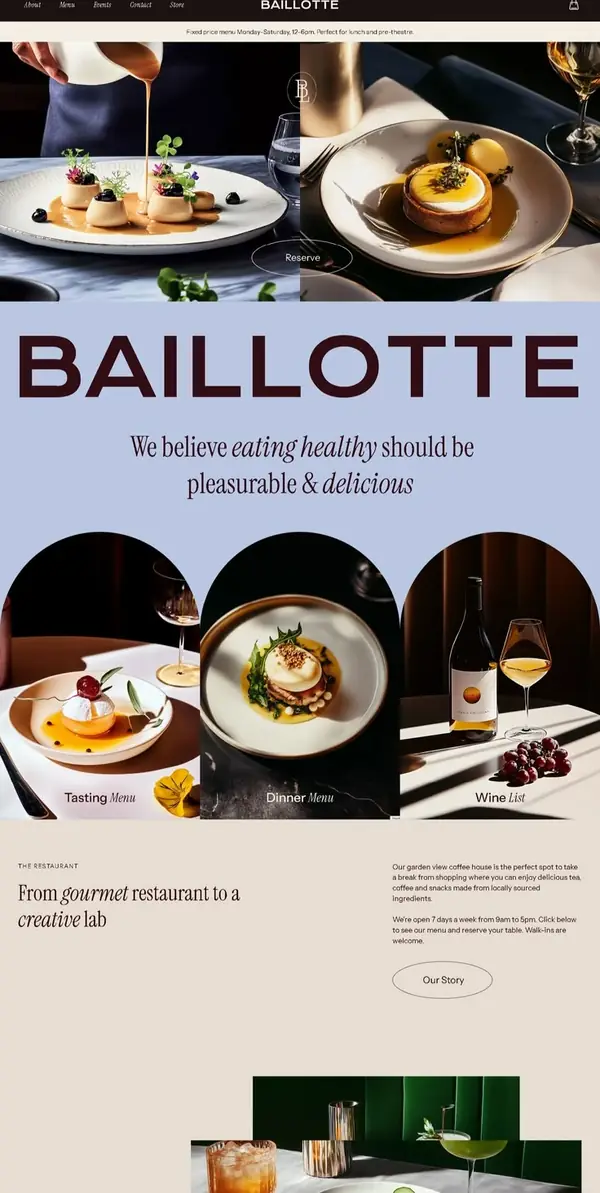
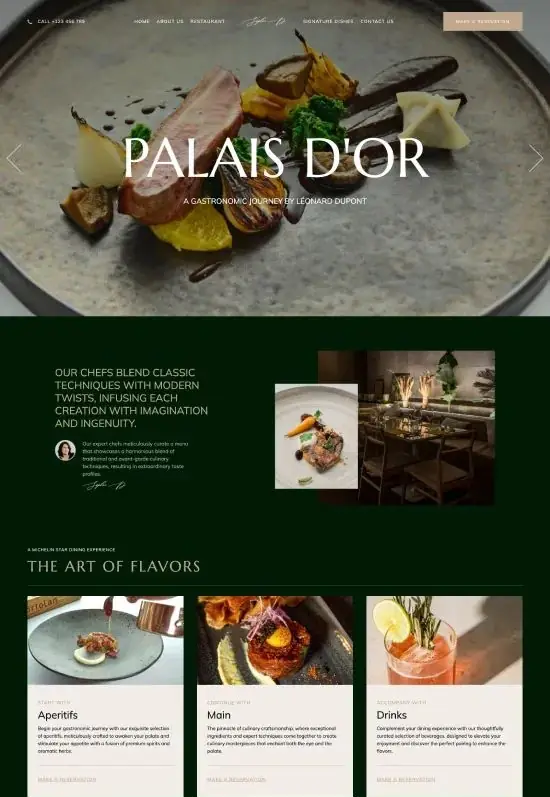
What’s the point of a restaurant website in Morocco when you already have Instagram?
A restaurant website in Morocco turns a search made on a phone into a booked table or an order: it shows your up-to-date menu, your prices, your opening hours and your address, and lets people book or order on WhatsApp in a single tap. Instagram makes people hungry; the website reassures them, and Google understands it.
Friday, 7:30 p.m., Guéliz. A tourist couple types “Moroccan restaurant Marrakech” into their phone. Google shows a map and three places. They open the first listing, tap “Website”, and look for the menu in English and the prices. If they find nothing within a few seconds, they move on to the next place. The same scene plays out in Casablanca for a business lunch, or in El Jadida for a Sunday brunch.
- A readable, up-to-date menu, instead of photos of the menu lost between two stories.
- Clear prices: many customers would rather not ask “how much is it?” in a private message.
- A presence on Google: your dishes, your cuisine and your neighborhood become searches you show up for.
- Booking or ordering without waiting, even in the middle of service.
Instagram feeds the desire; the website closes the deal. Do you also sell pastries or gift boxes? Read why a website changes everything when you sell on Instagram and WhatsApp.
What should a restaurant or café website include?
A restaurant website must answer five questions within seconds: what’s on the menu, how much it costs, where it is, when it’s open and how to book. Everything else comes after.
| Page or feature | What the customer looks for | The detail that makes the difference |
|---|---|---|
| Home | The atmosphere, type of cuisine, neighborhood | A real photo of the dining room or terrace, and a “Book” button visible right away |
| Menu | Dishes, prices, set menus | A text menu, not a blurry photo of the paper menu |
| Booking | A table for tonight or for a group | Date, time, number of guests, quick confirmation |
| Practical info | Address, opening hours, parking, directions | A clickable map and special Ramadan hours |
| Groups and events | Birthdays, seminars, Ramadan ftour | A quote request via form or WhatsApp |
A café doesn’t need all of that: for a coffee shop in Rabat or a tea room in Tangier, a single well-made page is often enough (atmosphere, menu, opening hours, address, WhatsApp). You add pages when the business calls for it.
How do you put your menu online so customers and Google can read it?
Put your menu online as a real web page, in text, organized by category, with prices and a photo for your signature dishes. A heavy PDF or a photo of the paper menu opens poorly on a phone, and Google only understands part of it, sometimes nothing at all.
- Sort by category: starters, tagines, grills, desserts, drinks; or, for a café, hot drinks, juices, brunch.
- Write real dish names: “Chicken tagine with preserved lemons and olives” reads better, and gets searched more, than “House tagine”.
- Show prices in dirhams, just like on the menu in the dining room.
- Flag the essentials: vegetarian dishes, spicy dishes, main allergens (tree nuts, gluten, milk).
- Stay in control: a simple admin area to change a price or hide a dish that’s sold out.
The same menu works in the dining room too: a QR code on each table opens the menu page, with a choice of language. No more reprinting the menu every time a price changes.
Online restaurant booking: form, WhatsApp or a dedicated booking system?
For most Moroccan restaurants, the best option is a simple booking form (date, time, number of guests, phone) that lands on your WhatsApp and that your team confirms with a message. A booking system with real-time slots makes sense when you run several sittings per evening.
| Option | How it works | Best for |
|---|---|---|
| WhatsApp button | The customer messages, you reply | Small restaurants, cafés, getting started |
| Form plus WhatsApp confirmation | A complete request comes in, your team confirms | Most restaurants |
| Booking system with time slots | The customer picks a free slot, the booking is recorded automatically | Very popular venues, several sittings, frequent groups |
- Always ask for a phone number, to confirm and to let the customer know if something comes up.
- Send a short reminder on the day: a forgotten booking is an empty table.
- Add an “occasion” field (birthday, business meal): your team can prepare, and the customer remembers it.
- For groups and Ramadan ftour, plan a confirmation the day before or a deposit.
A name and phone number are personal data, protected by Law 09-08: provide a privacy policy and, if necessary, complete the filings with the CNDP.
Should you take takeaway and delivery orders on WhatsApp?
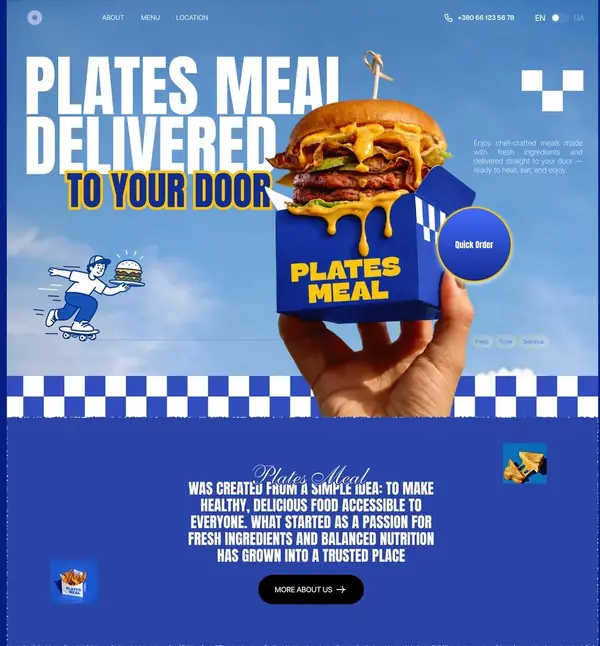
Yes, to start with: an “Order on WhatsApp” button on each dish, which pre-fills the message, is enough for many restaurants and snack bars. When orders pile up, an online ordering system (cart, cash on delivery or card payment) prevents mistakes.
Tuesday, 9 p.m., Agadir. On a snack bar’s website, a student picks a pizza and a juice, taps “Order”, and WhatsApp opens with a ready-made message: “Hello, I’d like 1 margherita pizza, size M, and 1 orange juice, delivered to Talborjt.” Your team receives a clear order, not a “salam, how much is the pizza?” followed by ten messages.
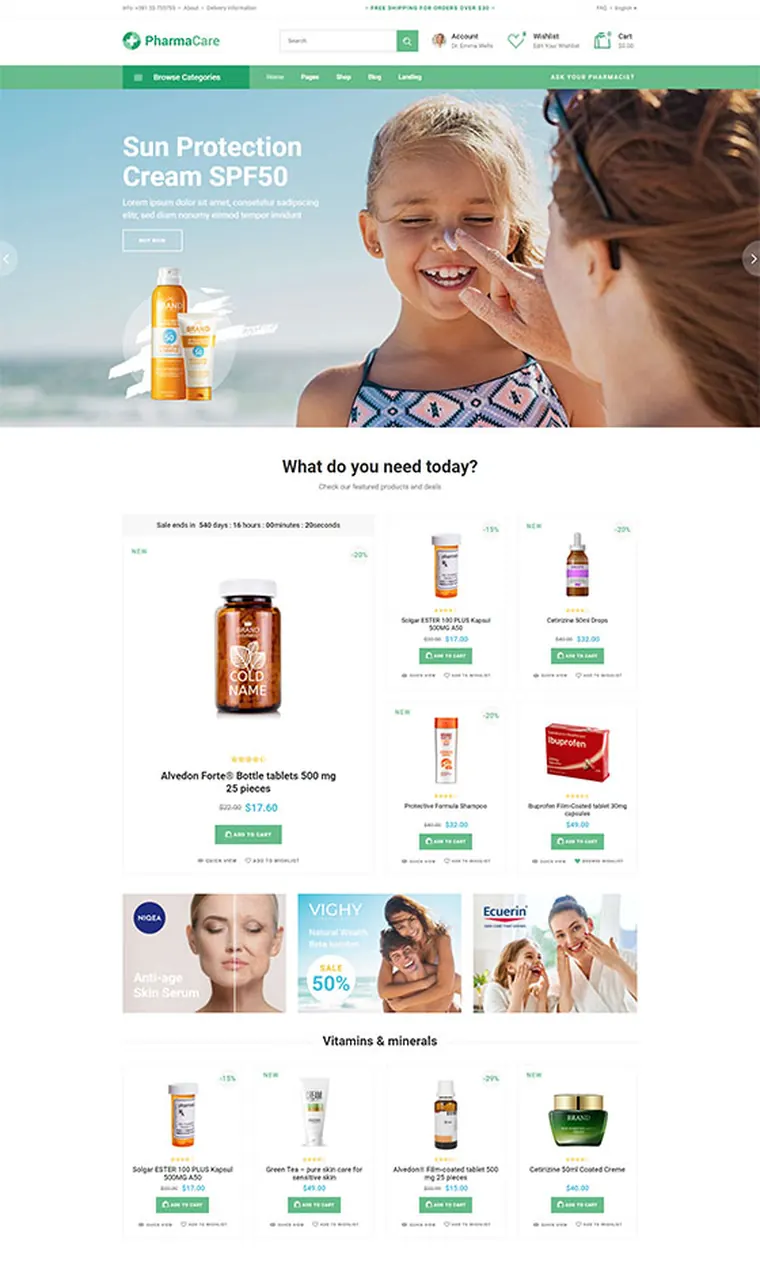
- Delivery platforms, like Glovo, bring visibility and couriers, in exchange for a commission set out in your contract.
- Direct ordering on your website involves no middleman, but you have to organize delivery: your own drivers or couriers.
- The right balance: platforms to get discovered, direct ordering for your regulars (QR code on the bag, loyalty card), while respecting your contract.
To go further, see how to create an online store in Morocco and our guide to online payment in Morocco.
How do you get your restaurant on Google Maps, in Casablanca, Marrakech or elsewhere?
To appear on Google Maps, you need a complete Google Business Profile linked to your website: it’s what shows up when someone types “restaurant Casablanca” or “café near me”. The website gives Google the details of your dishes and your neighborhood.
- A precise category: “Moroccan restaurant”, “Seafood restaurant” or “Café”, rather than just “Restaurant”.
- Menu and booking links added to the profile.
- Accurate opening hours, including during Ramadan: a customer who finds the door closed rarely leaves a good review.
- Recent photos of your dishes, dining room and storefront: people choose a restaurant with their eyes.
- Reviews, requested with a small QR code slipped in with the bill, and a reply to each one. See our guide to Google reviews.
On the website, one page per specialty can put you on precise searches: “brunch Casablanca Gauthier”, “Ramadan ftour Marrakech”. Schema.org structured data (cuisine, opening hours, menu, booking) helps Google and AI assistants recommend you. See our Google Business Profile guide and how to get recommended by ChatGPT.
A multilingual restaurant website: for whom, and how?
As soon as you welcome tourists or expats, a website in French, Arabic and English becomes essential: in Marrakech, Fez, Essaouira or Agadir, some of your customers read neither French nor Arabic. For a neighborhood clientele, French and Arabic are often enough.
- Each language gets its own menu, written and proofread: a “pigeon pastilla” isn’t translated word for word.
- Searches change from one language to another: “rooftop restaurant Marrakech” is not the same as “restaurant terrasse Marrakech”.
- Arabic displays from right to left, with a carefully designed layout.
The same logic applies to accommodation: read our guide to riad and hotel websites in Morocco.
Which mistakes drive customers away from a restaurant website?
Mistake number one: a website that tells you neither whether the restaurant is open tonight nor how much the dishes cost. Next come:
- A multi-page PDF menu, unreadable on a phone.
- Outdated prices or opening hours, different from those shown on Google.
- A heavy homepage video that takes long seconds to load on 4G.
- No button to call, book or message on WhatsApp at the top of the page.
- Stock photos: customers want to see your tagine, not someone else’s.
- A website that’s never updated: neither the summer menu nor the Ramadan menus appear on it.
- A domain name registered to the provider: your web address must belong to you. See choosing the right .ma domain name.
How much does a restaurant website cost in Morocco?
As a rough guide, a restaurant showcase website in Morocco costs about 3,000 to 8,000 MAD built from a theme, and 8,000 to 25,000 MAD custom-built and multilingual; online booking or ordering pushes the budget up.
| Needs | Indicative range |
|---|---|
| Showcase website with menu, built from a theme | About 3,000 to 8,000 MAD |
| Custom, multilingual website with an editable menu | About 8,000 to 25,000 MAD |
| Website with online booking | About 12,000 to 35,000 MAD |
| Online ordering with cart and payment | About 15,000 to 60,000 MAD |
These amounts vary from one provider to another. Add the domain name, hosting and maintenance every year. Full details in our guide to website prices in Morocco.
Checklist: is your restaurant website ready?
Before going live, check these points:
- Text menu, up to date, with prices, in French, Arabic and, if needed, English.
- “Book”, “Call” and “WhatsApp” buttons visible as soon as the page opens.
- Same opening hours on the website and on Google, including during Ramadan.
- Fast loading on 4G, tested on several phones.
- Address, map and directions (parking, landmark).
- Menu QR code printed for the tables.
- Google Business Profile linked to the website, with menu and booking links.
- Privacy policy online if you take bookings.
How Digilago can help
Digilago, a Moroccan web agency, builds websites for restaurants and cafés across Morocco: editable menu, booking, WhatsApp ordering, three languages and Google Business Profile. The price is confirmed in writing before we start, the first version arrives within 72 hours and, if you don’t like it, you pay nothing. See our website ideas by industry or describe your restaurant in two minutes. Prefer to write? WhatsApp us at +212 6 49 95 38 13, Monday to Saturday, 9 a.m. to 7 p.m.